
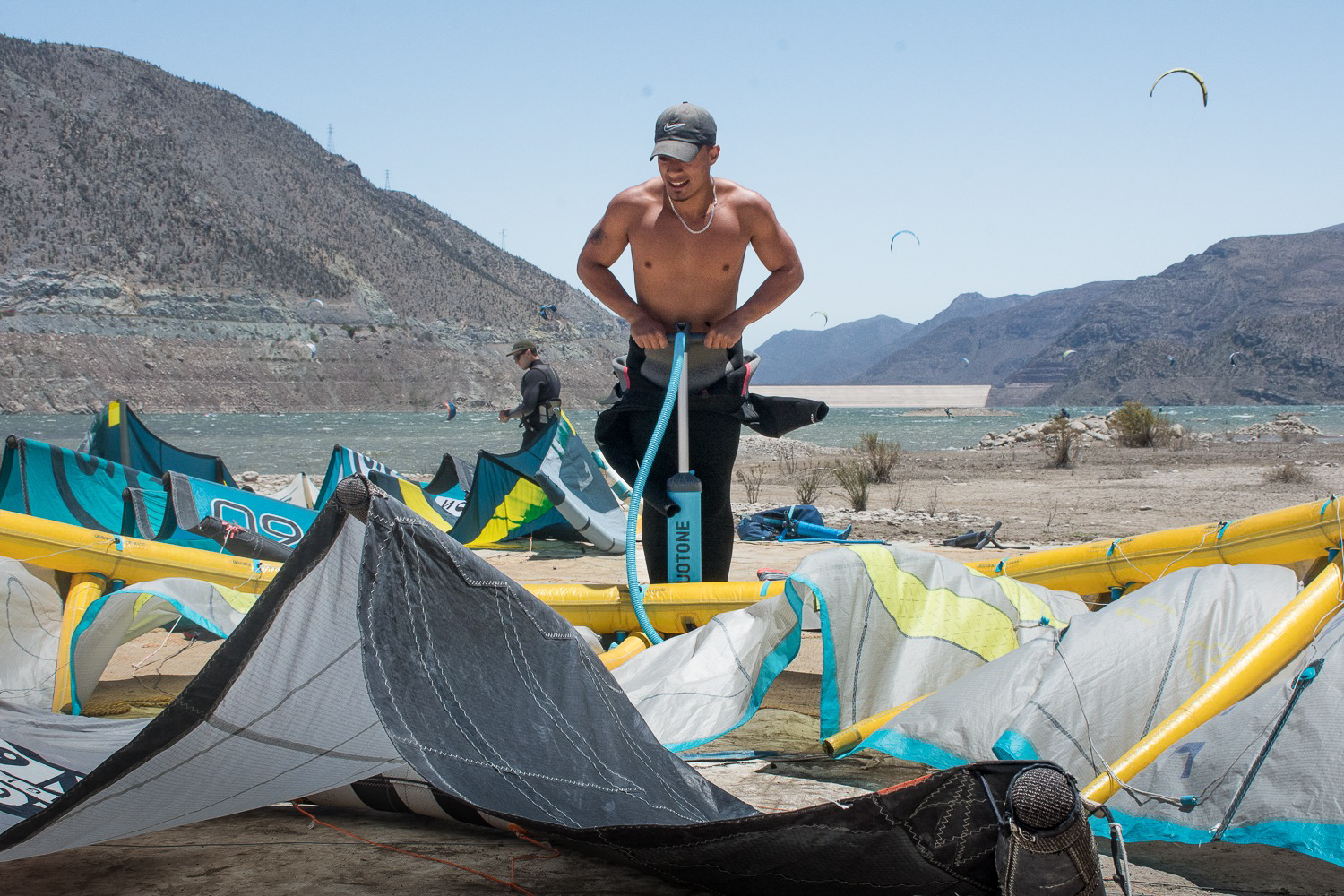
We all love kitesurfing! It allows us to connect with nature, meet people, and have a great time out on the water. While it can be an amazing activity to release stress, it is still an extreme sport—one that is safer every day thanks to the precision of modern gear technologies. Because of this, we must pay special attention to its condition and maintenance… here is a guide on how to care for your gear:
First, we need to understand the avoidable causes of wear and tear on your equipment:
Sun Exposure:
We know how damaging the sun can be, so we must avoid unnecessary exposure of the equipment to it. Packing away the kite and bar as soon as you finish riding will prevent the materials from getting UV-burned. Ideally, leave your board in the shade; if that is not possible, place it with the straps facing down to protect them.
Sand and Salt Crystals: Rinsing our kite equipment with fresh water after every session is the best practice. When salt dries, it forms crystals between the fibers of the lines, affecting their structure, which can cause them to stretch or even snap. The same goes for the kite and its canopy fabric, while metallic bar components (such as the Duotone Click Bar) can suffer in functionality.
Wind Exposure: This specifically affects the canopy fabric. The flapping that occurs when a kite is left parked on the beach severely shortens its lifespan. Make sure not to leave it pumped up and sitting between sessions; besides, the rest of the community will definitely appreciate the free space!
Kitesurf Gear Maintenance: Essential Guide for Wind Enthusiasts
1. Kite Inspection
– Visual Inspection: Before each session, check your kite for tears, pinholes, or any signs of wear. Pay special attention to the seams and valves.
– Cleaning: After every use, especially in saltwater, rinse the kite with fresh water to remove salt and sand. This helps prevent the deterioration of the materials.
- Drying: Let your kite dry completely before packing it away. Avoid rolling it up while wet, as it can develop mold and mildew.
– Pumping: It is highly important to clear out any sand that might be inside the pump nozzle or tube. This sand could enter the bladder and cause air leaks.
2. Control Bar and Line Care
– Regular Rinsing: Clean the bar and lines with fresh water after every single use. This prevents sand and salt buildup that can compromise performance.
– Line Inspection: Check your flying lines for signs of wear, such as fraying or knots. Damaged lines must be replaced immediately.
– Storage: Store the bar and lines unrolled in a cool, dry place. Avoid prolonged sun exposure, as UV rays can weaken line materials.
3. Board Maintenance
– Condition Check: Inspect the board for dings, deep scratches, or damage. These issues can affect its performance and long-term durability.
– Cleaning: Wipe down the board with fresh water after use and dry it with a soft cloth. This helps keep the surface in great shape.
– Fins and Pads: Check the fins and footpads. Make sure they are firmly tightened and in good condition. Replace any damaged parts. At the very least, you should re-tighten all bolts twice per season.
4. Proper Storage
– Temperature Control: Store your gear in a cool, dry place away from direct sunlight. Extreme temperatures can damage materials.
– Protection: Use bags to protect your kite and board from bumps and scratches during transportation.
5. Professional Inspection
– Annual Service: Consider taking your gear to a professional for a full check-up at least once a year. This includes checking the canopy stitching, valves, and overall structural condition.
Conclusion
Proper maintenance of your kitesurfing equipment not only extends its lifespan but also guarantees a much safer and more pleasant experience out on the water. By following these tips, you can hit every session with confidence and peace of mind, knowing that your gear is in prime condition. Get ready to catch the wind and ride the waves!